
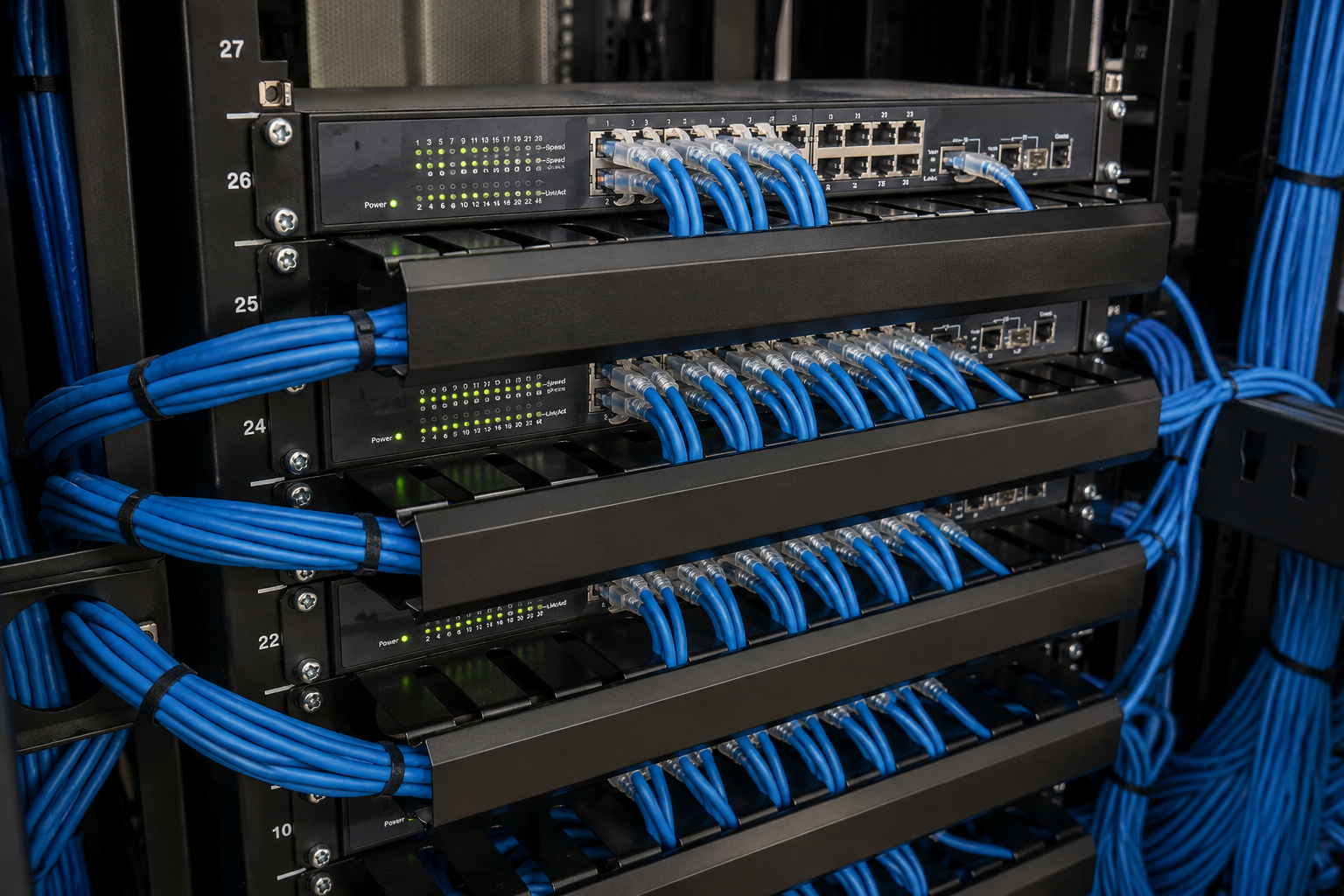
A customer calls with what sounds like a straightforward request. They need five more switches to support a new office, additional users, or an expansion of their existing network.
There’s just one problem: the switches already deployed throughout their environment are no longer readily available through traditional distribution. Maybe the model has reached End of Sale. Maybe inventory has dried up. Maybe the manufacturer has moved on to the next generation.
Suddenly, a relatively simple capacity requirement starts turning into a much larger conversation involving a new platform, new hardware, potential licensing changes, new configurations, migration planning, and deployment services.
But the customer didn’t ask for a network refresh.
They asked for five more switches.
When a Small Requirement Creates a Big Project
Technology refreshes are a necessary part of managing enterprise infrastructure. Eventually, equipment reaches the point where performance, security, reliability, supportability, or business requirements justify moving to a newer platform.
But those decisions should be driven by the customer’s actual technology and business needs—not simply because a particular SKU is no longer sitting on a distributor’s shelf.
Consider an organization with dozens or hundreds of switches already deployed. The environment is stable. The equipment continues to perform well. The IT team knows the platform. Configurations are standardized, and existing processes are built around it.
Now the organization needs five additional switches.
If matching equipment is unavailable through conventional channels, the easiest answer may be to quote the current-generation replacement. The problem is that replacing one product isn’t always as simple as replacing one product.
The Real Cost of Introducing a New Platform
The price of the hardware may only be the beginning. Depending on the environment, introducing a newer generation of infrastructure can involve:
- New or different licensing requirements.
- Configuration changes and engineering time.
- Compatibility testing with existing infrastructure.
- Updated management tools or processes.
- Installation and migration services.
- Additional training for internal IT personnel.
- Planned downtime or maintenance windows.
None of those considerations automatically make a refresh the wrong decision. They simply mean the customer should be making that decision intentionally.
If the existing environment still meets the organization’s requirements, finding five compatible switches may provide a much simpler path.
The Installed Base Changes the Equation
There’s an important difference between designing a new network and expanding an existing one.
For a greenfield deployment, the newest generation of hardware may be the obvious choice. For an installed environment, compatibility and consistency can carry significant value.
A customer that already has dozens of switches from a particular generation may prefer to add five more of the same model rather than introduce another platform. That’s particularly true when the additional equipment is needed for:
- Office or facility expansions.
- Additional users or network capacity.
- Temporary projects.
- Lab and testing environments.
- Disaster recovery infrastructure.
- Replacement spares.
- Extending an environment until a planned future refresh.
The challenge isn’t necessarily determining what equipment the customer needs. It’s finding it.
Discontinued Doesn’t Mean Disappeared
When a manufacturer stops producing a particular model, the remaining equipment doesn’t suddenly vanish.
Inventory may still exist throughout the broader technology supply chain. Excess inventory may be sitting with another supplier. Equipment originally purchased for a project may never have been deployed. Professionally refurbished equipment may also be available from existing environments that have already transitioned to newer platforms.
That creates an alternate supply of hardware outside conventional distribution.
The key is knowing where—and how—to look.
That’s one of the roles SmartSource IT can play for VARs and MSPs. We help partners locate hard-to-find, excess, open-market, and professionally refurbished enterprise hardware when the equipment their customers need is no longer readily available through traditional sourcing channels.
Give the Customer Another Option
Imagine telling the customer:
“That model is no longer readily available through our primary distribution channels. We can quote the current-generation platform, but before we turn this into a larger refresh project, we’re also checking alternate inventory sources to see whether we can locate additional units that match your existing environment.”
That’s a very different conversation.
You’re not arguing against a refresh. You’re giving the customer enough information to decide whether one is actually necessary.
If matching hardware is available, they may be able to complete the expansion while preserving their existing environment. If it isn’t—or if the economics don’t make sense—the refresh option remains available.
Either way, you’ve done more than simply relay an availability problem. You’ve helped solve it.
Sometimes the Best Upgrade Is No Upgrade Yet
Eventually, every infrastructure platform needs to be replaced. The question is whether that needs to happen today.
For customers with stable environments, additional compatible hardware can sometimes extend the useful life of an existing infrastructure investment until the organization is operationally and financially ready for a broader refresh.
That might mean another year. It might mean three. The appropriate timeline is different for every environment.
What matters is giving customers the ability to make that decision based on their needs rather than having inventory availability make the decision for them.
Before You Quote the Refresh, Check the Market
The next time a customer asks for additional equipment for an existing environment and your distributor responds with discontinued, end of sale, or unavailable, don’t assume the conversation has to immediately become a refresh.
The hardware may still exist through another supply channel. Checking the market gives you another opportunity to solve the customer’s original problem before proposing a much larger one.
Sometimes finding five switches is considerably more valuable to the customer than selling them an entirely new network.
Need Hardware for an Existing Environment?
SmartSource IT helps VARs, MSPs, and IT resellers locate hard-to-find, excess, open-market, and professionally refurbished networking, server, and storage hardware.
If your customer needs equipment that’s difficult to find through traditional distribution, send us the manufacturer, part number, quantity, and required condition. We’ll help you determine what options may be available.
related posts

When a hardware deal falls apart, it's easy to blame price. Sometimes that's accurate. More often, though, price is simply the last symptom of a [...]
Network transceivers rarely receive the same attention as switches, routers, or servers during an infrastructure project. They're relatively small components, but they play a [...]
